OK, it's been a long time. There's been stuff on my mind.
Then again, this is really a continuation of my last post, sadly enough.
As I write, the UK Parliament is just about an hour and a half away from voting on whether to start bombing in Syria or not.
The situation there, to be frank, is one massive clusterfuck: It's as if a world war is being waged in a very small piece of land. Actually, scratch the 'as if' - that's exactly what's going on.
Pay attention to history: we've been here many, many times before, but what this most precisely reminds me of is the Spanish Civil War, in particular the clear deployment of new weaponry and techniques in an experimental theatre of war.
Guernica, anyone?
The big difference is that Guernica happened once: In Syria, it's being enacted every day. Just as technology has accelerated the pace of life, so the dark arts of war have accelerated the pace of death, and the numerous ways in which to die.
And it seems that nations large and small are dying to die. Forget the fact that DAESH are a death cult - I can't see a reason why we can't level the same phrase at those who have jumped into this war zone. What else is it, to unleash hell hither and yon?
Bearing this in mind, I cannot see how a bombing campaign from this country can possibly help, except in the very narrowest of senses, by allowing certain politicians to appear on the top table of politics. We should also factor in the financial aspects, by the way: There's always a lot of money to be made from the suffering of others: for example, the alleged fact that Israel has already given oil prospecting rights on Syrian soil to a company owned by Rupert Murdoch.
Are we so in love with money that we are thus in thrall to death?
I cannot see the ethical or moral case for bombing. I cannot see the political case for bombing. I cannot see the economic case for bombing.
I can see the opportunistic case, however. I can see the mendacious case. I can see the cynical case.
More than that, I see the case made by those too lazy to think or feel.
Should DAESH be stopped? Utterly, totally undoubtedly. But bombs are dumb - we need smart responses, not hard ones.
It is up to all people of good will to do what they can to prevent malice and fear and hate. Maybe I can't do much in a physical sense, but I will use what is available to me: My mind and my ability with words - let these be my sole weapons in a world swimming with blood.
There are days and times when one comes close to despair, when there seems to be nothing but ugliness and horror all around, when the news is bloated with stories of humanity's inhumanity. Such has it been over this past week. Whether it's the massacres in Paris, or the killing of thousands in Nigeria, or the ongoing unfolding horror that is Syria and Iraq, or little men full of nothing but their own importance preaching of their own virtues, it's enough to make one sick to the stomach. I could turn off the TV and the computer, put virtual fingers in my ears, cover my eyes and listen to nothing but the silence of my mind; or I could stumble around, quoting Yeats.
Neither, of course, would be an answer.
Then again, re-posting satirical cartoons that mock the weak and not the strong is also not really a suitable riposte.
I have heard an unbelievable amount of crap being talked over the past week, neatly summed up by Rupert Murdoch's idiotic demand that all Muslims should apologise for the Paris killings, Richard Dawkins' latest histrionic rant, and the Fox News 'Expert' who claimed that Birmingham was a no-go zone for non-muslims. It never ceases to amaze me how the 'experts' crawl out of the woodwork to make their opinions known, before scuttling back into the darkness of their mind caves.
Why is it that we need, bluntly, white middle-aged male 'experts' on Islam whenever there's an 'Islamic' atrocity, when we would be (quite rightly) offended if some bloke with a beard and a robe started inveighing against so-called Christian transgressions? Such as, for example, Amjad Choudary, who is pretty much the Islamist equivalent of Outraged of Tunbridge Wells. It strikes me that many of these religious experts are well-versed in the acts of mankind, but distinctly lack much knowledge of the God they profess to understand.
I am not going to pretend to be an expert on Islam: I can't pretend, for that matter, to be an expert on Christianity, or any other religion you may choose to nominate. However, at least I do not dissemble myself into that most Protean of things, an 'Expert'. The ones I've been watching seem largely to be people who've done just enough reading to confirm their prejudices.
I have, however, had the privilege of living in a truly wonderful country that happens to be majority Muslim (Turkey, as if you didn't know..). I have to say this: the image of Muslims and Islam that is time and again represented in the western media is totally, entirely and completely unlike the people I knew that happened to live in a country where Islam was the main religion. I now happen to live in a country where Christianity is the main religion.
Does this mean that my life is dominated by the rhythms, orders, injunctions, requirements and demands of the Church of England?
Er, no.
Except for, nominally, Christmas and Easter.
And that is pretty much the deal, from my own experience at least, for most Muslims - religion touches one's life, but does not dominate it. Most of the Turks I knew smoked and drank and rarely went to the mosque, except during Ramadan and at times such as weddings and funerals - in other words, their interaction with faith pretty much mirrored life back home.
And 'mirror' is an important word here.
It strikes me that the horror of ISIS, the butchery inflicted by Boko Haram, the killings by a pair of disadvantaged, alienated men who were nevertheless a product of France, all of them, are a gross, distorted mirror held up to the 'West'. They reflect back our own prejudices, fear and anger, and in turn a mirror is held up to them.
Going back twenty years, the mirrors of societies were more normative - life in the UK both resembled, and was a reflection of, life in Turkey, both the good and the bad. Yet in the last fourteen years, the mirrors we as societies have held up to each other have become increasingly distorted, unreal, surreal even. The haters on both sides resemble no-one more so than their opposite number, while the normal middle, the ordinary, decent people who just want to live their lives as well as they can are squeezed out of existence. The mirrors of the worlds have become like those you see in a circus, emphasising above all else all that is baleful and grotesque.
What can be done about such stupidity and ignorance? Be full of passionate intensity or lack all conviction and do nothing?
I won't pretend to have all the answers. All I know is that we, the average, the ordinary, the meek and unremarked of this Earth, all of us who just want to live, need to wrest the mirrors of the world from those who warp them, take them back and render them back into their true shape.
You'd think that a country that has a war literally on its doorstep might be doing something about it, but Turkey's seeming inaction over ISIS, Syria and Iraq is ominous.
As I write, IS are continuing their assaults on Kobane (or Ayn Al-Arab), refugees continue to pour over the border, Turkish Kurds are being prevented from crossing into Syria to help protect the city, and tens of people have been killed in protests in cities right across the country. Meanwhile, Turkey's Foreign Minister, in talks with the new head of NATO, has said that it is 'unrealistic' that Turkey should lead a ground assault, while demanding that his country be allowed to set up a buffer zone and no-fly zone inside the Syrian border.
So what's happening? Why has one of the world's largest standing armies not done anything so far except move its tanks to the border?
There are several explanations, some less charitable than others.
Let's start with the most benign interpretation. Turkey has been a vociferous opponent of Bashar Al-Assad's murderous regime over the past three years, and any attempt at involvement against ISIS will only bolster his rule. Also, as a NATO country, if it engages in Syria, it runs the risk of getting involved with a larger enemy: Russia, which is Syria's ally. Just to point out, in case it's been forgotten, that Vladimr Putin now has a highly effective Black Sea presence in Crimea, thanks to his annexation of the peninsula earlier this year. Turko-Russian wars, in the past, have not gone very well for the Turks. Not for the first time, Turkey is caught in a bit of a bind.
Extraopolating from this, what would happen if Turkey attacks ISIS? This may provoke a direct, large assault on Turkish soil. Now, this would admittedly be unlikely, as well as suicidal: As I said above, Turkey's military is enormous, well-funded, and far more of a threat than the Iraqi Army. However, an assault on any NATO member constitutes an attack on all members, leading to full engagement - and once again, we come back round to the risk of full-on war with Russia as a by product.
Moving on to a less generous interpretation, astonishing as it may seem, ISIS and Turkey, or rather the ruling AKP, and bonded by their religious outlook. The majority of Turks are Sunni Muslims, as opposed to the Syrian regime being Alawite muslim, and the Iraqi government's Shia majority. That's not to say the AKP (necessarily) share the off-the-loonbar-spectrum views of their ISIS co-religionists, but they have certainly demonstrated sympathy for them in the past. There are accounts of ISIS fighters being treated in hospitals, covert Jihadi training camps near the border and the tendency for authorities to turn a blind eye as people come and go from one country to the other. They also seem to be consistently supplying more and better weaponry to ISIS than any other resistance group. In April, I witnessed what was, as I later realised in retrospect, a large demonstration in support of ISIS, in the very heart of Istanbul.
The harshest interpretation is that Turkey is playing a murderous game of Silly Buggers with everyone concerned, in particular with the Kurds. Ankara has made no secret about its antipathy towards a de facto Kurdistan on its borders, while at the same time doling out the odd concession on language rights within the country. Quite simply, they are working along the lines of 'my enemy's enemy is my friend', and they will be perfectly happy to see the destruction of the Peshmerga throughout Syria and Iraq. The government's propaganda machine is currently in full flow, claiming that Turkish Kurds are sacking government buildings and damaging infrastructure throughout the southeast, hence the reason why the police and Jandarma are being so heavy handed. Looking at social media, one can see that feelings are running very high. Many Turks associate the Kurds solely with the PKK (the Kurdish Workers' Party), and blame them for the brutal civil war of the 80s and 90s. In addition, the PKK are seen as a terrorist organisation by both Turkey and the US, meaning that they would be seen as a 'legitimate' target in the event of Ankara ordering the tanks to roll over the border.
I cannot help but feel that this is an incredibly dangerous game to be playing. The Kurds are, in effect, guarding the Turkish state, and are paying for it in blood from both sides. And history shows, time and again, that every state that has existed in the Anatolian Plateau ignores the people on its southeastern flank at its peril.
At the same time, I have a little sympathy with Ankara's plight. It faces a genuine threat to its territorial integrity, albeit one that is to some degree of its own making. At the same time, other NATO members are really not making life easy for them. The best bet, at present, would be to ensure an effective flow of weapons, training and tactical support to the Kurds. However, to do so would fly in the face of years of political antagonism, and the AKP would be wary of doing anything to reduce their share of the popular vote. Yes, Recep Tayyip Erdogan is quite happy to let blood flow rather than risk the anger of the electorate.
Unfortunately, whatever they try to do, the Turks are being pulled into the black hole of war by the sheer gravity of events, and that should concern us all greatly.
And who, ultimately, is to blame? Probably those behind an agreement made just after the first world war, one that has caused unforeseen and untold damage in the region since. But that's something to be described another time.
So, here, I think, is the culmination of many of the past few weeks' posts. Perhaps you should start by watching this video, where Reza Aslan, a professor of religion and author of Zealot:The life and times of Jesus of Nazareth, rips apart some spectacularly poor journalism and the lazy, cheap comedy of Bill Maher. On the other hand, perhaps you'd like to wait until the end of this post. Either way, I recommend watching it.
There are fewer things in life more depressing to hear than lazy generalisations, especially from people who should know better. It's a vice which I have been guilty of in the past and one which I try to remain entirely on guard against. I rarely, if ever, take things on face value (again, see my posts on advertising regarding this), and I will question, probe, doubt and ask for evidence. So when I watch and hear some of the vile nonsense decked out as fact when it is little more than opinion, as it is in the video above, it brings me to the edge of despair. There's an old adage, well-beloved of demagogues everywhere: A lie will go round the world while truth is pulling its boots on.
And right now, everywhere I look, I see lies sprinting hither and yon.
Another image comes to mind: a great circle of people, standing in the half light, whispering something to the person in front, he message becoming increasingly distorted as it goes around this infinitely large circle until it is little more than the meaningless sussuration of bees, meaningless yet freighted with the meaning that each whisperer within the circle confers upon it.
Some of you who read this will, I know, be saying 'Well, religion is a lie itself - are you going to defend that?' Others among you may be thinking 'Well, yes, [insert religion here] is a backward/barbaric/[insert any negative adjective of choice] worldview'. Some of you may want to remonstrate - 'Let me tell you, I've read/seen/researched [insert subject here] and I find that it is [insert suitable epithets here]'.
So I ask you: What do you know?
Not what you think you know, but what do you actually, solidly, concretely KNOW?
Not what someone in a newspaper, or on TV, or in a magazine, or on Facebook or Twitter says they know, what do YOU know?
I know my own answer to this. More importantly, I hope that I am honest enough with myself to be able to accept the limits of my own little knowledge and accept the darkened seas of non-knowledge that lap the shores of my thought.
If now you are asking what my answer is, I refer you back to my question above.
Seeing as I have put this post in the context of the current soi-disant Clash of Civilisations, let me bring in a few examples, although I will fare badly against Mr Aslan's succinct summation of things. If you're a Christian, or possibly a 'Christian', or if you just happen to come from the 'West', and like a mince pie and a singsong at Christmas, or an Easter egg at, er, Easter, I want you to think of three or four things you associate with Islam.
Off you go, now. Don't censor your thoughts.
OK?
Odds on at least one thing on your list was pejorative. But why? What do you actually know?
OK, another question - what are the tenets of Islam, and what are the traditions of cultures that happen to have Islam as part of their culture?
In fact, there are only 5 things you need do to be a Muslim -
State that you believe that there is only one God (and Allah - Al-Ilah - literally translates as 'God' in the Judeo-Christian sense);
Pray five times a day (way down on the requirements of some of the more bampot versions of Christianity);
Give to charity (via a tax called Zakat - similiar to Tithes);
Fast during Ramadan;
Go on pilgrimage if you are healthy and wealthy enough to do so.
- And that is that. Not a beard, a burqa, a niqab, a tesbih, or an aversion to booze in sight (although I know that there will be muslims who will disagree strongly with that statement). Follow the five pillars of Islam, and that's it - you are a Muslim.
Now, what kind of Muslim you are - that's a different matter entirely, and as Mr Aslan says, religion is essentially what people bring to it. And if what they bring is shadows and fear, then that religion, or that culture, or that political system, or that civilisation, will be one of shadows and fear.
Now, just to give a bit of balance to affairs, another question: What are the tenets of Christianity?
Well, just two really - That Jesus is God and the son of God, and Love Thy Neighbour. That's it. No hellfire, no Ten Commandments, definitely no Leviticus, and not a sign of Sandals and tofu bicycles.
Yet how many nominally Christian people, or perhaps I should say those who protest their faith a little too loudly, do you know whose grasp on faith is, shall we say, a trifle wobbly at best?
Tony Blair, for example. Or George W Bush.
Or....well, the list is compendious.
Moving the spotlight away from faith for a moment, we can see that this tendency to fall into the habit or relying on cliche is pervasive. It's there when people start blaming immigrants for a loss of housing, or jobs, or benefits; It's there in the way President Putin calls the Ukrainian Government 'fascists'; It's there when gays and lesbians are attacked,imprisoned and murdered in Nigeria and other countries where there are laws banning certain sexualities; It's there when someone says 'All [insert group of choice] are...'; It's there, even, when we come to believe of ourselves that we are useless, or worthless, or less than good because someone else has bullied us.
How do we not do this? How do we love or understand what we do not know? How do we respond to the easy whisper in the ear, that hasping sound so full of doubt? How do we love the alien?
By reading, by questioning, by doubting all - by looking, first, to know what is in ourselves, because, I think, we have to first love the alien within us before we love the alien without.
Once again, we find the UK taking military action in the Middle East, following the overwhelming vote in Parliament approving intervention. Once again, politicians have warily circled the issue, probed it, questioned it, some more avid for action than others, some urging utmost caution. Once again, we are presented an image of some demonic force that is a threat to our very existence, and of a situation that is very black and white, rather than the hideous grey smear of truth that it really is. The Middle East is on the verge of complete meltdown, and the reality is that no one really knows what to do, whose side they should be on, and in fact whether they should do anything anyway.
At least IS presents a good old Solid Target, even if they are being oversold as the Enemy du notre jours. They are, through the combination of serendipity and the Iraqi Army's complete lack of discipline in action, an extremely well-armed, tech-savvy, gang of murdering, smuggling, misanthropic, heretical brigands, not a state, and definitely not a Caliphate. But they're not the only group of people out there busy being misanthropic and beheading people. If our beef was just with that, then we should, by rights, be bombing Saudi Arabia, Iran, in fact pretty much everywhere in the region. Some argue that we should leave the whole place alone, and argue that this is really a war between which version of Islam should dominate - that this is the Semitic equivalent of the religious wars that convulsed all of Europe from the late Middle Ages onwards. I think there is some merit in this argument, but one intrinsic flaw - who would you be happier doing business with when it comes to buying oil? The Saudis may be ultra-conservative Sunni muslims who'd chop off a hand at the drop of a head, but at least they're OUR ultra-conservative hand-chopping Sunni muslims.
Who is the enemy?
Ask an Israeli soldier: He'll say Hamas, or Iran, or possibly everyone outside Israel's immediate borders.
Ask President Erdogan of Turkey: He'll point the finger of blame at the whole world.
Ask an IS fighter, born and bred in the East End: He'll shout that it's all the Kaffirs.
Ask an American: He or she might explain it's the A-rabs.
Let's get closer to home. Who's the enemy?
Ask the SNP: it's the elite in Westminster.
Ask Nigel Farage: the same (especially considering they ruined the first day of his conference).
Ask the Conservatives: It's Labour.
Ask Labour: It's the Conservatives.
Huddle in even closer. Who's the enemy?
The guy who cut you up in his car this morning?
The boss?
That person who looked at you in a funny way in the supermarket, possibly because you had eleven items in your basket when you were in the 'Ten items or less' queue?
The person who wrote the sign for the aforementioned 'Ten items or less' queue, when it should be 'fewer', not less?
Where does the enemy begin?
Look in the mirror, and there it is.
The enemy, such as it is, begins where we are not - it is the Other, the thing that embodies, personifies, all the things that we believe we are not. The enemy is often just a projection of our own shadows, and the more intensely we are averse to our perceived opponent, the more intense they are in 'opposition' to us - and, in return, we are their shadows, too. So Israel and Hamas are each others' throats, and will remain so in perpetuity while their struggles persist; ISIS are the Shadow of the West, welling up through the sand because of the mistakes and poor decisions that have plagued the entire region since at least the Sykes-Picot Agreement after the First World War; and indeed, wherever you look, sectarianism, religious intolerance and plain old bigotry appear again and again wherever people are too scared to look into the mirror of their fears.
It doesn't have to be this way, of course. Whatever we may think of other people, they are still people, not baby-chomping, kitten-stabbing ogres, just as the face you look at in the mirror each morning is still you. It is being afraid that can make monsters of us, and just knowing that makes it easier not to be ruled by fear. The enemy does not have to start at the mirror, or across the road, or over the border, and this should be remembered, even in the hardest of times.
A last post about the Scottish Independence referendum. I have to admit I was surprised that the 'No' vote won it by 55% to 45% - I thought that it would be much, much closer. And now there are the celebrations and the hangovers, the reviews and the soul-searching, the triumphalism and the reflection, and of course the yards and yards of newsprint devoted to analysis and talking heads populating the screen.
So, did 'no' win? Did timidity win over temerity? Is it a case of Business as Usual?
I really, really hope not.
This campaign has demonstrated irrefutably that people can become engaged with politics, can engage with difficult issues, and do make a difference. This much the politicos have acknowledged, and so far have made a lot of noise about making changes, including what is in effect a Devo Max deal for Scotland. Yet what politicians such as David Cameron and Ed Miliband are good at is playing a long game - that is, they will carry on being involved in the politics once the media fuss has died down and the circus has moved on to the next spectacle. And, being the politicians they are, they will carry on doing what they do and quietly hoping that it will be very much Business As Usual.
If that happens, we will only have ourselves to blame, should it be the case that what we really want is a change to the way power and money are shared across the country, but we do nothing to effect that change.
Democracy is of the people, by the people and for the people, and is far too precious to be left to a chamber of technocrats and people who've known each other since they were at school or university together. It has taken this referendum to reawaken the debates that should have dominated the political process since at least 2008. Look at what happens if we slumber: We have MPs' scandals expenses that rumble on but don't really change; We elect a police commissioner who won't resign despite his clear failure to act during the Rotherham child abuse scandal; We have bankers' bonuses rising once more to obscene levels, and the wealth gap between the very richest and the rest of us rising to levels that have not been seen for more than a hundred years; And we have a government that seems to flail in every contrary wind.
For this awakening, we should be grateful to the people of Scotland. And if we lose our freedom, having been shown it, then shame on us.
I'm writing this not long after the murder (not execution:that implies some form of judicial process, not arrant barbarity) of British aid worker David Haines at the hands of IS, and after an announcement of a coalition of nations to fight it. I can't help but feel that the members involved range from eager to barely lukewarm at best.
How do you stop such barbarity? Do you fight fire with fire? Do you, as Bishop Almaric allegedly said at the sack of Beziers, say 'Kill them all. God will know his own', as you destroy everything and all in your path, and leave nothing but cinders in your wake?
IS is a formidably well-armed, but also well-organised, system. Its brutality is not random and it has precedents in the past to which it supposedly looks with such warped reverence. Throughout history, people have been terrified of marauding armies and the atrocities they carry out, whether in truth or fiction. This current group just happen to be a lot more tech-savvy and know how to use social media to disseminate their message, and, to a certain demographic, make it look like some kind of Boys Own-type adventure.
I think that the 'Boys' bit of that sentence is one of the more crucial parts to understanding how IS behave - that is, their front line grunts are largely teenagers and young men. Pretty much, in fact, like any army anywhere in the world. All armed services work in a similar way when it comes to training up raw recruits - essentially, kids are broken down and built back up in the interests of the system that needs them: They are made to feel that they are part of something bigger, stronger and better: They are given a community, a fraternal system of support - very often a surrogate family. It's no wonder that military life often attracts recruits from the poorer fringes of society, as it provides stability, sustenance and strength, along with adventure and excitement, something always attractive to young men.
That, however, is where all semblance ends. These particular kids with guns, it seems to me, have one thing that is generally erased from a rank and file soldier because it's ultimately detrimental - namely, a grievance. And that grievance is fed and nurtured by a cult-like act of programming that goes far beyond what most militaries do.What is apparent from the videos released by IS, in particular the one by British IS members, is that these are people who feel that they have never been listened to, that they have been marginalised, ignored, despised. They seem like people who felt their lives were going nowhere until the opportunity of glory in war appeared. Someone gives them a gun and it feels as if they have been empowered and liberated - and woe betide anyone who speaks in opposition. They dream of something incorruptible and perfect, yet seek to build it on the tottering fetid corpseflesh of war.
In fact, we have seen this same image again and again over the past decade or so - young men on grainy videos, berating distant people and governments, waving an admonishing finger in the air and exulting in the fact that the are being heard, being feared, being, in a perverse way, respected.
Yes, respect: Isn't that what a lot of gang culture is? Respect, face, maintaining a kind of strength. And having weapons makes it all the easier, because for such people, creating fear through the use of force is mistaken for being strong, for being respected.
So, how do we stop the kids with guns? I don't have any answers really. Kill them? Get ready to kill the next generation to come along afterwards, then. Ban them from coming back into the country after their foreign sojourns? Maybe, but I'm not sure what this would actually achieve. Imprison them? How and where do you hold them? How do you deprogramme them from their beliefs?
It doesn't matter if the truth is in front of you, stark, bare and ugly, if someone wishes to believe that what is in front of them is not true, then lo and behold, it is not true.
If I want to believe that a brown teapot revolves around the sun, and that on some planet far, far away and far, far ago live a race of unicorns that fart pink glitter, then who are you to disprove me, you bloody heretic?
Belief shouldn't really work, yet it does. Faith really does move mountains. Sometimes, these mountains might be heaped piles of heads, yet faith moves them.
Anyone who says they have a 'passion' for something or other while wearing a suit.
Advertising and advertisers.
Politicians.
A certain kind of 'religious' person.
What do they all have in common? Well, they're all out to flog something or other to people, and in return relieve others of their money, or their vote, or their humanity, or their soul. I should know: I used to sell car number plates, a long, long time ago, and believe me on this, there are few jobs more soul-destroying than telesales, selling bloody car number plates. It was a relentless treadmill of drudgery, where a little electronic beep in my earpiece would induce a Pavlovian reaction as I put on my best smiley voice and soothingly sold a little dream in the form of a number plate to adorn the cars of Great Britain.
Strangely, for many callers (Yes! They actually called ME), this dream consisted of having a number plate that said something like A 5 HIT, or A 5 LAG, or K 11 NTS. Seriously. Even celebrities from TV were avid for the damn things - Jim Bowen was a regular punter, for example. I never understood the allure, but here's the thing: I was damn good at selling the bloody things. I could fill the most drab and tedious of numbers with a hidden allure, just by using my best telephone manner. I could make people believe in what they were buying. I sounded as if I believed, as if I had a passion for selling what was in reality something rather worthless, that I could imbue a few numbers and letters with a mystic power significant only to the person I was in communion with, and make them believe.
And, three minutes later, anything up to £500 poorer.
I know what belief sounds like, because I can make the noises myself, and so I am never very easily convinced by those who would have me believe that they have my best interests at heart, that their product will make my life tangibly better just by being in my possession, that their policies will be all the better for my vote, that my soul will shine all the brighter if I just follow them.
You might think, from all I've just said, that I'm an out-and-out atheist, but actually I'm agnostic - I cannot demonstrate that God, as a being beyond the known universe, doesn't exist - although I don't think the God that seems to have a surprisingly narrow moral and ethical agenda that looks suspiciously like the anthropocentric concerns of humanity is for real.
Blimey, that was a long sentence.
Anyway, I am generally agnostic on most issues, as you will have seen from my entries on the Scottish referendum. I largely remain to be convinced on a lot of things - I immediately want to know where the evidence is, or what research backs a statement up, or how such and such can be justified.
This is all very good for academic work, but it does tend to send my nearest and dearest up the wall when we talk, to put it mildly, as I can come over as wilfully contrarian.
Which I'm not.
Well, sometimes.
Having said all that, however, it has become inescapably evident to me over the years that we do need faith, we do need belief, we need hope and dreams, not just for ourselves, but in order to live, to cooperate, and to thrive in this world. It might be the invisible belief that things will just work when we need them to, or the faith that the bits of metal and paper we carry round in our pocket actually have a kind of value that can be used to buy things. It might be the beliefs we develop over a lifetime, that one political party is better and more likely to be on our side than the other, or that wearing ties makes you stupid (I'll explain this one in a later entry). Or indeed, the faith that beyond this waking world is another land of eternal bliss - or eternal punishment.
We need to believe in order to live, and the problem with this is that it's eminently exploitable, whether it is by the boss of a company saying he or she has a passion for, let's say, manufacturing wingnuts, or an advertisement for a fast car, or a politician saying he'll deliver on his promises for, let's say, national independence, or for the preacher who says he can shepherd your soul into the Maker's fold.
A lot of the time, faith and belief is a good thing: It's a cohesive device that binds families, communities, societies and nations, yet it is also so, so easily abused.
As we have seen through the entire Middle East, the cradle of the Three Faiths that dominate the Earth, belief can be a raven, from Tony Blair and George W Bush selling the world the myth of the 'weapons of Mass Destruction' in 2003, to the iron belief of Israeli prime ministers taht they can attack civilian populations with impunity, to the murderous, vile, apostate faith of IS in Iraq and Syria at present.
You don't catch many agnostics bombing the hell out of a nation, or beheading someone for their lack of agnosticism.
And yet, for all the ill that belief and faith can do, still we must have some kind of belief, have some kind of faith - not one that says 'I am right and they are wrong', but one that says that things can get better and that people can be, in essence, good.
Anyway, that is the faith I will hold: Given a choice of direction, people will generally opt for the good, and that it's everyone's job to help where they can.
...or, to paraphrase Von Clausewitz, "War is a continuation of trade by other means".
The news has been pretty much uniformally dreadful over the last few months, and the situation in Iraq and Syria, with IS, in Gaza, between Hamas and Israel, and in Ukraine, with the Russians, has had the press in an almost continual apocalyptic fervour. I even heard someone on Radio Four this morning gravely considering the chances of a nuclear exchange between Russia and NATO.
So, are we on the verge of World War Three, yet again? Erm, no, we aren't.
Probably.
Of course, you have every right to chuckle and say 'told you so!' if you happen to be reading this in the future from the smoking, radiation-blighted, mutant zombie-infested wreckage of the Earth. Except you would, of course, be dead, or a zombie.
Several of this blog's critics gather to laugh at me.
For starters, I think, rather than being distinct wars, we're really still caught in one continual Great War, one that has flared and burst out sporadically globally for at least the last hundred years. Just because it hasn't been going on in Europe or America doesn't mean it hasn't been going on elsewhere, and I suspect that is how future historians (possibly radioactive mutant zombie ones) will see this current epoch.
One thing a future historian might note, however, is the way in which almost-big conflicts broke out, or rather didn't break out. Ukraine is one of these. This isn't to belittle all the people who have been killed, injured and terrorised on both sides: Rather, I'd point out that if Russia really wanted to subjugate Ukraine, they would have done it by now. As I write, a tentative permanent ceasefire has been announced by the Ukrainian President, which is, of course good news should it hold.
The fact is that Russia has no real interest in a land grab. It does, however, have a very real interest in stirring up the news, a bit like a newspaper stirring up a 'controversy' during the dog days of August - it is very, very good for business. And it's not just good for Russia: Both Britain and the United States stand to make good money out of any security scare. Just witness the £3.5 bn armoured vehicle deal signed at the NATO meeting, for example. And the US will be making a pretty penny out of upgrading the UK's Trident systems.
It is a truism that some people always make money out of a war, but currently it seems that everyone is trying to make a buck out of conflict, except for the people right in the firing line. Now, sometimes wars have to be fought - IS, for example, should be extirpated - but it's these 'almost-wars', or conflicts that seriously weaken, but don't kill, the enemy, that are perhaps more perniciously immoral, because behind the face of battle you find the same people, again and again, trading with each other.
It would not surprise me entirely to discover that while Vladimir Putin is shouting out one thing in public, he's having pally conversations in private to ensure that trade isn't too restricted, that the price of gas doesn't go quite so high, that embargoes don't bite quite so hard.
Of course, I could be entirely wrong, and the world is about to go Ka-Boom.
Apocalypse, 80's style.
In which case, you might need to trade whatever you can get hold of in the post-apocalyptic world.
For example, a burglar alarm that warns you of attack by radioactive mutant zombies.
To sell one of these, the technique is simple: Throw a brick through the window of a house, then knock on the door and say, 'Those damn zombies are trying to break in - this'll keep you safe!'
It appears that speakers from both sides of the independence debate are getting shouted down at public meetings and in some cases having things thrown at them. With only days to go before the referendum, this is unnecessary and really does not help either side, succeeding only in entrenching and dividing people.
It's also a shame, because the debate on the subject has become much more interesting and nuanced over the past few months, and it's that debate that I want to hear, as it raises issues about democracy and representation for the whole of the UK, not just Scotland.
It boils down to one simple question, really: Who do we want to represent us politically? This, in turn, leads us to ask Tony Benn's 5 Questions regarding power.
What has arisen, I think, is that the 'Yes' camp is far more varied in what it wants from independence than is sometimes represented in the media. Certainly, it would appear that people living in the Shetlands, the Orkneys and the Hebrides either regard Holyrood as being no better than Westminster, or would like to have power devolved more directly to them. By contrast, the 'Better Together' (a.k.a. 'No') Camp seem to be far more homogeneous, to their detriment. Why their detriment? Because they have painted themselves into a corner in some ways: they cannot talk about the issues regarding representation without actually providing reasons to vote for independence.
So, who should be our representatives? Should we be tied in perpetuity to what is in effect a two-party system? Must we get stuck with politicians who are more obsessed with a party stance and getting elected than actually doing the job to which they have been elected - governing on our behalf? Who controls the economy? Why should a relatively small group of people have so much power and to what extent are they accountable (or not) to the people?
The very best of the debate (and that is most certainly not the televised grandstanding between Alex Salmond and Alistair Darling) has asked these questions, and they are pertinent to life within the whole of the UK. With the economy 'recovering' (for whom?), house prices are rising at absurd levels; prices are rising, while wages remain relatively stagnant; The NHS is being privatised by stealth, while it has become abundantly clear that the privatisation of our resources and industries has not turned us into a nation of shareholder, but instead allowed those shares to be owned by overseas investors; The very people who were culpable to a large extent for the financial disasters of 2008-9 are still in position and in fact have done very well from downturn; And the current government seems to be in thrall to the money.
And yet nowhere in England or in Wales is anyone really questioning the status quo. Only in Scotland are these questions being raised, debated and considered.
Quite honestly, given the few issues I've put above, who wouldn't want independence?
Well, I've stated before that I'm agnostic on the issue. And besides, I don't get to vote on the thing.
I think there are two questions that anyone pondering whether to vote 'yes' can ask. They are 'How?' and 'When?', and these work when put to any of the proposals laid out by either side. For example, the one about currency - 'How will we use the pound post-independence?' (a question that to my mind has not been satisfactorily answered by either side), and 'when will this happen?'
If all of the 'How' and 'when' questions can be answered satisfactorily and clearly, then I think that a 'yes' vote is actually a no-brainer. People want assurance, but assurance on such an issue is not enough -a concrete road map of what is most likely to happen will be the thing to win the issue, even if some of what may be will involve difficulty and even hardship for a time.
Finally, just one thought: There are times, when you don't know what to do and you can't decide, that you've got to take a punt.
Good luck to all of us.
Ahem.
Apologies for the long hiatus in writing. I suppose I should apologise for interrupting the silence with writing.
I have found myself, over the last few months, at a loss as to what to say about anything: it seemed every time I put pen to paper, or finger to keyboard, stale, lumpen phrases would emerge, ruining the pristine whiteness of the page or screen with a kind of grey detritus. Of course, what we write and say are as reflections of our mental state, supposedly, so I can only assume that my dominant mode of thought has been stale, lumpen and grey. A bit like a dead whale or something. The thing with dead whales is, given the right conditions, they eventually explode.
Now, I'm not saying that my mind is on the verge of blowing up and covering all and sundry with putrid viscera, although you may disagree by the time you reach the end of this article. Rather, I'm writing in reaction to a local something that has left me feeling somewhat beslimed.
I could write about Syria, and Iraq, and Gaza, and Israel, and the whole damn mess of the Middle East, and in fact, I will later; I could write about the Scottish Independence Vote further, and I still have a little more to say about it, in fact; I could write about Ukraine and Russia, or Cops and Residents in Ferguson, MO.
I could write about all these, and mine would be just another little voice, another little article, in the great sea of voices, the clamouring great winedark ocean of opinion.
Instead, I'm going to write about tribes. Or rather, not: I'm going to respond to some spectacularly ill-judged and misinformed statements about 'tribes' that I and several hundred others had the misfortune to be in the presence of some little while ago. First off, would you consider yourself to belong to a tribe? What is a tribe, anyway? Is it the same as a family or a clan? Is it a group of like-minded families gathered together in the name of communal protection? Is it a religious affiliation? Is it a gang? Is it a bunch of people who share the same workspace, or do the same job?
I happen to think the word 'tribe' has tremendous connotations attached to it, and I don't mean 'tremendous' in a good way. It smacks of colonialism to my mind: It has the whiff of a mildewed solar topee attached to it, of an elderly man with extravagant moustaches and a fly swatter made from an elephant's tail regaling someone with tales of the Raj from his retirement villa in Eastbourne. It implies, even confers, a kind of inferiority to anyone so apparently unfortunate as to be assigned to a tribe. The word conjures up images of savages who need to be quelled, educated and conformed. Hence my tendency to squirm whenever I hear it being used.
So you can imagine my discomfort and slight shock when I heard someone say the following: 'In Africa, people belong to different tribes and if they meet, they fight'.
Yes. Right.
So.
I mean, erk.
This statement seems to have come freshly packaged, hot and steaming, straight out of the 1930s. It ignores the fact that Africa consists of more than one country, for starters. It ignores the demarcations of religion, language, borders, culture and politics and jumps for the lumpen blitheness of 'tribes'.
Thankfully, nothing was mentioned about 'waving spears' or 'heathen savages', so thank God for small mercies.
There was, however, more in this vein.
How about this?
'The Sunnis are a tribe. The Shia are a tribe. ISIS is a tribe.'
Yes. Right.
So.
I mean, erk.
Where do you start with this kind of misguided statement? ISIS are not a tribe. Try 'Murderous bunch of apostate millennialist loonbars', and you'd be closer to the mark. But tribe they are not. In fact, they're very much an Equal Opportunities murderous bunch of loonbars, as they will allow anyone to behead somebody as long as they're of a Sunni disposition.
So are the Sunnis and Shias tribes? Er, no, they're sects of Islam, much in the same way that Protestants and Catholics are sects. Along with Alevis, Alawites, Wahabbis, Ba'hai........
In short, the ongoing wars of the Middle East are more on sectarian lines, yet even then that is too simplistic an interpretation. It certainly isn't however, about tribes ganging up on each other.
The speaker hadn't finished there, however.
Here's another little (vintage) nugget:
'In Yugoslavia, the tribes started killing each other there, and look how many died.'
Yes. Right.
So.
I mean, erk.
I'm pretty sure the Bosnians, Serbs, Croatians, Slovenians and Montenegrins would not see themselves as 'tribes'. When it fractured after the end of the cold war, it split along spurious ethnic and religious lines - in particular between the Orthodox Serbs and the Muslim Bosnians. I say 'spurious' ethnicity because there's precious little evidence to suggest that any of the five nationalities is ethnically different - and indeed, they speak pretty much the same language!
So, a tribe isn't about ethnicity, or family, or language, or culture, or religion (which is admittedly as aspect of culture). Yet tribes, apparently, are a cause of tension, unrest, fear, destruction and death, at least according to the speaker I had the misfortune to be in the vicinity of.
The overall message that the person speaking was I think trying to get across, and failing rather spectacularly, was this: Tribes Kill Other Tribes.
No, they don't. People Kill People. Just because the person being murdered happens to belong to a different 'tribe' doesn't mean it's a 'tribal' thing. And instead of the negatively-freighted word 'tribe', why not use 'group' or 'gang' or, bigger still, 'community' or 'nation'? The speaker could have. After all, if 'tribe' just means 'a collection of people with more or less common affiliation of one kind or other', then that covers a multitude of sins, as it were.
And talking of tribes is so belittling - call them what they are. People.
A post a little bit after the event, but later is better than never...
My girlfriend, Sue, and I spent five days in the Big Stan during the Easter holidays, and had a great time. It's been four and a bit years since I was last there, but the changes have been really noticeable. Just thought I'd share what was most memorable:
..and a collage of the five hundred or so pics I took.
1) The Metro System
This was only really properly getting under way back in 2009, and I remember when I first boarded the original line from Atakoy to Aksaray back in the 90's. I have to say that, as far as the main centres are concerned, this is a really well-conceived and joined-up, something I never thought I would say about the state of Istanbul's traffic twenty years ago. I even risked the dodgy plumbing of the Mamaray, the line going under the sea between Sirkeci and Kadikoy, and was genuinely astonished by the speed of the service. The Istanbul travel card (similar to an Oyster Card in London) was also a definite plus.
Having said that, from the journeys I did, it seems that it is an effective service only for certain, wealthier parts of the city.
2) Kadikoy
It's been absolutely yonks since I last went there, and I was pleasantly surprised by it - the Carsi is an excellent area of small lanes full of different types of food shops, and the restaurant and bar scene is much livelier than it once was.
3) Kumkapi
Disappointing, with the exception of the live street music - I found the menus a bit uninspiring, and the food wasn't much cop, with the exception of some genuinely exquisite fresh mackerel fillets. The place hasn't aged well.
4) Wine prices
What the HELL is going on with the price of wine?? It's ridiculous: over 40 quid for a mediocre bottle! Just a few years ago, Turkey had a fledgling wine industry that was developing into something bold and interesting - now, the government seems determined to strangle it. Gone, it seems, are the days of buying a bottle of Dog Killer for about 50p.
5) The underground bins, and the relative cleanliness
Seems a bit dumb, but the underground bins in Sultanahmet are a huge improvement on the stinking cat-ridden skips that blocked every corner of a few years ago. The tourist areas are also definitely way cleaner than before.
6) The range of tourists
Again, this may seem odd, but back in the mid nineties, virtually all the tourists were Europeans, Americans, and Japanese: Now, just wandering around the main tourist drags is extraordinarily eclectic, with a significant number of visitors from all round the Middle East, possibly because of the Magnificent Century factor.
7) A different kind of edge
This is a bit hard to quantify, but it was something that I felt - Istanbul seemed to have a different atmosphere in the people on the street. It was as if its febrile air of hustle and trade had been subtly changed to have something else, a tension that was waiting to be released, a sensation of almost imperceptible fear. The only way I can express it is that it was as if the whole city was keeping one eye over its shoulder to check who could be listening.
A very short post, at least in terms of word count. I was reading an interesting article in The Guardian about maps and how we're starting to lose paper-based versions of them thanks to our various bits of electronic gadgetry and flim-flammery, and by happy chance I came across an old atlas on my dad's bookshelf. It was Phillip's Crown Atlas, published in:
Published just on the cusp of the Second World War. It must have belonged to my grandad originally, but looking through, I couldn't help but notice how much had changed, how many things had gone, or had come into existence. There are the obvious things, such as the red on the map denoting the Empire:
Then there are the Lost Counties of England:
Some things are shocking - this map of Africa shows the extent of its carving-up by European powers:
The ones I found strongly disturbing, by dint of hindsight, were these maps of Czechoslovakia, marked 'Provisional Borders':
It all goes to show that nations change and borders don't always remain the same - salutary for what is happening around us nowadays.
I've been watching events unfold in Turkey over the past few weeks with a sense of trepidation, and yesterday's municipal elections have done nothing to alleviate this. It would appear, on the face of it, that the Turkish Republic may be facing a slide into autocratic, one-party (or, more pertinently one-man) rule. The ruling AKP has taken approximately 47% of the vote on a very high turnout, with the next largest party, the CHP, trailing well behind on 29%. PM Erdogan has taken this election as very much a mandate on him personally, and will almost certainly aim for a run at the presidency, or possibly change the rules in his favour and get another term as Prime Minister, later in the year. More worryingly, his rhetoric is increasingly belligerent and hostile, and promises lurid revenge against all those he typifies as 'traitors' and 'enemies of the state'. This, from a man who has openly admitted to hoarding millions of dollars in his home, who has admitted that his administration has discussed setting up a false flag operation in Syria with the intention of invading - things that, in another country, would lead to the resignation of the government.
So how on earth is this party, and this man, still in power?
There are six key points, I think, and one thing to remember about the AKP: They are not a political party that consists of backwood yokels - instead, they are one of the most efficient, up-to-date, and skilful political machines out there. Here are the six things that have made them strong.
1. They know, understand, and appeal to their electoral base.
The AKP, and its predecessor Refah, spent a lot of time connecting with the towns and villages of Anatolia, essentially listening to their needs, their fears and worries, and promising that they would be addressed. Anatolia is far more conservative and pious that the big cities, but it is also the workforce that power places like Istanbul and Izmir. These incomers (and migration to Istanbul alone is estimated at least 1,000 people a week) bring their politics with them, obviously - it makes sense to catch the poor because their votes translate directly into power. This is something that other parties have missed, because....
2.The Anatolian electoral hinterland that comprises this base has been ignored by mainstream politicians for decades.
During my time in Turkey, it was obvious that Anatolia, for the politicians, might as well have been Outer Mongolia. MPs were big on promises, but short on outcomes, and the lot of the average villager never improved. Despite the modernisation of the cities and tourist regions, you don't need to go far into the hinterland to realise that much of the country is still developing. The mass of voters were regarded as little better than obedient serfs, who would vote for whomever they were told to vote for. This has come to bite the political parties firmly on the backside, and none of them really seem to know what to do. Why?.....
3.The lack of a credible alternative.
The opposition is hopelessly divided and doesn't really fill one with confidence: instead, it's the same tired faces with their own history of scandals, graft and corruption. They also seem to fall back on an assumption that, were they ever to regain power, they would be able to do everything back in the old way. They have not grasped the reality that the AKP have changed the game entirely. They have failed to adapt, have presented no credible challenge, and are at least partially culpable for the domination of the political scene that Erdogan enjoys.
4.The state's system of checks and measures, e.g. the media, an independent judiciary etc, have been subsumed and compromised by the AKP.
Because of the weakened opposition, Erdogan and the AKP have been able to sack members of the judiciary with impunity, block journalists from reporting, lock writers up and generally create an atmosphere of fear and paranoia that pervades all those who find themselves on the purlieus of the administration. A state where all parts of the system cannot work is a sick state and one that is doomed to fail sooner or later. The problem is that it will take decades for Turkey to rebuild, especially in terms of the trust needed.
5.Erdogan controls the traditional media. His electorate don't use online media.
Despite the fact that social media is widely used in Turkey, nevertheless the vast majority have no truck with online sources of information. They rely on TV, newspapers and radio, all of which, because of the way they have been filleted by the AKP, are supine in their news coverage and meek about reporting anything that may offend their political masters. Again, this is nothing new: during the 90's, TV channels were regularly closed down as a punishment for revealing something the political elite didn't like. The difference this time is that the media is largely complicit with the ruling party, rather than challenging and questioning. The electoral base of the AKP, being people who are generally speaking from backgrounds with less access to education, are less likely to question what their leaders are doing. And why should they? After all...
6.The AKP's electoral base feel they have benefitted economically and socially over the years of AKP rule.
Ultimately, it all comes down to the economy. From the perspective of the average AKP voter, they feel wealthier -there are more things in the shops, there is a boom in new building and infrastructure, there is seemingly greater access to jobs and money - and while that feelgood feeling persists, there is little likelihood that they are going to vote for anyone else. This, despite the fact that on average, the typical person is apparently worse off - however, when it comes to the very poorest, their lots have been made somewhat better. Not only that, these voters feel that they are being listened to, something that other politicians have failed to do again and again.
Yes, the economy is the key: the problem is that the Turkish economy is increasingly resembling an enormous Ponzi scheme, and, like the Spanish and Irish economies, is due to crash at some stage. It is simply unsustainable as it is, especially in light of the information being leaked about the kickbacks and bribery that seem to be the norm at the heart of the administration.
So, what will happen next? I fear that Erdogan will now feel he has carte blanche to go hunting for his enemies, and to increasingly take power into his hands alone. He doesn't care for democracy, just power. After all, he once said, 'Democracy is like a bus: Useful to take you where you want to go, but you can get off at your stop and make your way after that'. And that doesn't bode well for Turkey.
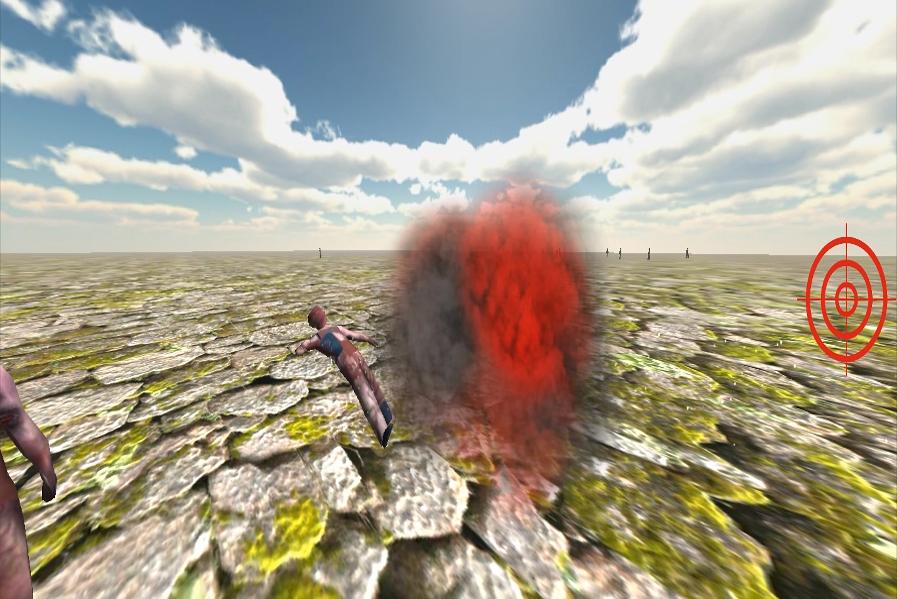
I've got a new game on my mobile phone. It's called Sniper Z. It's tremendous fun: you have a rifle and a limitless supply of bullets, and all you have to do is shoot zombies, who walk towards a red line in a disconcertingly casual way. They all look as if they're out for a gentle stroll on a bright sunday afternoon, right up to the moment when they get shot in a spray of blood.
Bang! Splat! Take that, zombie!
So why am I talking about it?
Because it is fun, but it's a distraction. Because ultimately it's tiring and futile, as you can never stop the innumerable tide of zombies, no matter how good a shot you are, or how long you play. And all of these things - fun, distracting, innumerable, tiring, futile - refer to how I approach arguments, ideas and situations when I could better employ myself focusing on just a few things. I spend time sniping at this thing or that point, at the oncoming torrent of what are ultimately, for me at least, things that are the walking dead - that is, things that have no value to me or give me anything positive - they just weary and finally, like a zombie, eat my brain.
How often do we spend time on 'zombie' events, or zombie arguments? As an example of the latter, let's take the current soi-disant debate on immigration. This is a zombie debate if ever there was one. Once it lumbers to its feet, it just trundles on and on, impervious to weapons and utterly pointless to fight, yet it's not really a worthwhile argument. You will always have immigration from one area to another, and that is that, full stop. But still the newspapers and media are stuffed with nonsense, and I have to endure Nigel Farage's pointless face on my TV screen.
Aaagh! Zombie!!
In fact, politicians tend to set up zombie issues in order to deflect attention from what's really going on. In the UK, for example, tropes on education, health and defence are long-distance zombies, with one lumbering to the fore for a while, before being supplanted by another. Arguing over these subjects is largely futile - instead, we would be better off working out who's started which undead brain-muncher going.
But also in, for want of a better term, real life, we are faced with our own personal zombies - getting resentful at work, for example, because of how the organisation works; frustration at the daily commute; worrying too much about what other people are (or aren't) thinking; Fretfully going back and forth to emails or Facebook, wondering why you haven't got any messages; The list of things, like the staggering ghastly corpses lurching towards you in the game, is endless.
We cannot beat every argument; However, we should also realise that we don't have to, as a lot of what we do when we engage with such things is genuinely pointless, even when, in the case of political arguments in my case, it can be fun. Instead, I suggest that instead of trying to pick off every zombie, and end up getting your brain eaten anyway, you stay still, look around, and find the real living things to aim towards. After all, why should we be ever surrounded by dead things when all we want to do is live?
Well, since that last entry, it all appears to have kicked off in the press, just as I thought it might. What should have been a debate about national independence seems to be descending into Personality Politics and the stances of various parties. This is more than a shame, it's a disgrace, and one that will be costly to all people concerned, i.e. all of us. This issue is far too big to allow it to be decided solely by a slanging match.
Make no mistake, this will affect life on the south of the border too, and everyone in the UK needs more information than a 'He-said-this-and-he-said-that' bulletin on the 6 O'Clock news.
Will Scotland vote for independence come September? I don't know, although it looks set to be a close run thing. I think it will all boil down to who makes the most compelling economic argument - the problem for all concerned is that we are entering unknown territory vis-a-vis things like Currency union, EU membership, Debt, even how much Scottish Viewers may have to pay to watch the BBC, and it's all to easy for politicians to fall into entrenched roles.
Will Scotland go independent? I think it's probably a case of when rather than if: The I-word genie is well and truly out of the bottle, so it will come down to the nitty gritty of the how it happens. As I said in my previous post, I remain to be convinced by the figures and the mechanisms for dealing with things like EU membership, which is probably what most people are waiting for.
No, I haven't left my job thanks to a sudden windfall, nor am I exactly celebrating the rather saddening end of my marriage. Rather, I am thinking of a certain woad-encrusted Antipodean actor screaming that at the serried ranks of Edward I's army in the movie Braveheart.
The issue of Scottish independence is rising up the (English) news agenda at the moment, with the vote on whether Alba will break away from the Union coming in September. Predictably, the political divide is becoming more entrenched, with PoshBoy Osborne (backed by an unlikely cross-party chorus) stating that there is no way that Scotland will be allowed to keep the pound, and Alec Salmond getting very huffy about it all.
Where do I stand on it? Well, being part-Scots, I think it's entirely appropriate that I should feel entirely agnostic about the whole thing, even if it means my old friend Johnny Mellon will be miffed at me. But why? It's not as if I have a thing against independence; on the contrary, national (and regional) self-determination are important features of a civilised world, to my mind.
It's these two things that disturb me and gives me pause for thought: firstly, the sums and secondly, the assumptions, on both sides of the debate.
Dealing with the first, the figures being bandied about simply don't look right. In particular, the figures on North Sea Oil Revenue. I'm worried that the SNP are being wildly optimistic here, and forgetting a simple fact: The Oil Will Run Out Eventually. What then? Are they planning to invest oil revenue in the same way that the Norwegians have? That would be the sensible route, but it also entails having far more pragmatic plans in place for a) taxation, b) future revenue streams and c) thinking about what they can actually spend post-independence. It strikes me that configuring the new nation along a Scandinavian model in terms of its finances would be no bad thing, but I don't really get the sense that this is being discussed. On this side of the border, the impression given is that somehow it will all continue as normal after the divorce.
The truth is, of course, that divorces are rarely easy.
And this is where the worry about the assumptions cuts in: it strikes me that the SNP seem to think that currency union, membership of the EU and NATO etc will just happen overnight in a single smooth transition. I very much doubt that. It would be lovely if it did, but the blunt truth is that there would be little or no strategic interest in the Big Boys of Europe allowing a brand shiny new independent nation straight in through the front door. Instead, a hiatus of several years should be expected - after all, how long did it take the Eastern European countries to get into the EU? There's no point Alec Salmond jumping up and down and saying, either 'la la la, I can't hear you', or 'It's not fair!', these are issues that need to be addressed seriously. Likewise, English politicians doing their best to put everything in a negative light, or Anti-SNP Scottish Politicians trying to even old scores don't help matters.
And there's my point: Scottish Independence would be a fine thing, just as long as it's done clearly, soberly and with an understanding of the risks it may entail, and at the moment that's exactly the debate that is needed, not a load of grandstanding. Saying 'No!' or 'You can't do that' isn't the way to run one side of teh campaign; but equally, yelling 'Freedom!' is all very romantic, but romance doesn't put bread on the table.
The end of the year once more, and time once again for a bit of indulging in solipsism - or is it just me? It's tempting to ape all those end-of-year reviews you get on TV, radio etc, to ask oneself 'what have I done?' and writhe about in guilt about all the stuff not completed or not even started, and start making solemn vows about everything that's going to happen in 2014, only to writhe in guilt a year later when it comes to the next Review Of The Year.
One thing I have to consider, however, is the fate of this blog. Not, I admit, the first time I've considered it, but the paucity of writing over the past year in particular has been painful to look at. Or not look at, seeing as I haven't written anything. I think this has been a symptom of a general malaise affecting me, or rather the realisation of a simple fact that I've been blind to - namely, I arse around far too much. Of course, I'm not alone in this affliction, but it seems that I do two things simultaneously: a) I lack direction and planning and b) I make things as hard as possible for me to get a direction, mainly because I then go into loads of mini-plans and schemes that give the impression of doing something.
I wonder whether this blog is in fact not part of the latter, hence why I'm considering knocking it on the head.
Let's face it, I've kept it going, if not on the boil, then at least in the vicinity of the kitchen, for nearly eleven years, and it has lived up to its billing as an erratic journal. I also notice that it's read by a sizeable percentage of zero readers, so perhaps it's time to let go.
If I feel that I can actually achieve something more tangible with this, then I shall let it stagger on, in the hope that it will find its own two feet again.
Until I decide, have a Happy New Year.
Have you ever had a dream, whether in the depths of sleep or
while lulling through the more tedious aspects of your daily routine, where
somewhere out there is another version of you, living a fuller, more complete
life, one that consists of far more Adventure, Excitement and Really Wild Stuff
than is generally available? Or have you ever considered what would have
happened if you had taken a slightly different decision, or the road less
travelled, or if you’d not drunken quite that much and ended up in the police
cell?
One of the staples of Science Fiction is the Alternate
Reality, or where a decision taken takes the whole universe down a whole
different Trouserleg of Time. I can recall, in fact, having several dreams
where I’ve encountered myself in different dimensions, replicated multiple
times in different cosmic scenarios. I have to say I wasn’t too impressed with
my alternate lives – they all seemed to be much the same, except for the
universes where I had inexplicably died in bizarre and/or highly amusing circumstances.
In fact, some scientists postulate that this is entirely possible – the so-called
multiverse hypothesis, where every decision causes a whole new universe to pop
into existence, so that for every time you went left, a different you went
right, and for the You that finds itself hungover in a police cell there’s a
brighter, slicker, shinier and generally more sober You that finds him/herself
in a far more salubrious environment.
The bastard.
It’s a highly attractive theory – just imagine that you are
replicated over and over again in countless myriad universes, free to keep
making decisions, sometimes – well, actually, more often than not – making mistakes,
but somewhere in this countless number of infinities, in this limitless ocean
of repeated times and spaces, there’s a little you who makes all the right
decisions and ends up with the perfect life.
The bastard.
I always thought it would be great to be able to travel all
across these dimensions, meeting myself, as it were: In fact, there are those
who believe that this can, rarely, happen, and accounts for people seeing
Dopplegangers, or themselves from the past/future and so on. Unfortunately, I
have come to see it as all a bit bunk. And why?
Well, it’s this whole the-decision-causes-the-universe-to-split-off-into-a-new-universe
thing. Why a decision? Why not a random chemical interaction? Why not the decay
of an atomic particle? Why not a gust of wind? The whole multiverse hypothesis
seems to me to rest on the presumption of decisions causing change, which in
turn requires the sentience necessary to make a decision, and indeed the self
awareness that is in turn necessary to understand that decisions make
differences.
In other words, a universe that behaves in such a bizarre
way, that it goes and spawns a whole brand new shiny universe that is exactly
the same except for one tiny detail, seems to be a bit on the extravagant side.
It means that the universe is in effect designed to foster sentience, which
strongly suggests that it is, in some way, sentient itself. After all, getting
whole new universes popping into existence simply because I decide not to have
some jam on my toast is actually quite a
clever asexual reproduction strategy, and means that our universe (whichever
one it is now) can keep on going literally ad infinitum.
We should also consider that a lot of what we consider to be
decisions based on free will are nothing of the kind, but are pretty much the
random outcome of the chemicals sloshing round our brain and/or the interaction
with our environment, according to an increasing body of research into brain
function and psychology, which means that if the universe is popping out
versions of itself based on the fact that my noggin is currently mired in
booze, it’s doing it for all the wrong reasons. Unless of course, the cosmos
knows I’m pissed, and therefore decides that I’m in no state to go round doing
ad hoc universe-popping.
So, the whole idea of a sentience-supporting realm of
existence bothers me, because it strongly implies a created system. In
addition, it strikes me that one could, in theory at least, eventually develop
a computer that could track the movement of every particle in creation from the
Big Bang onwards. If so, it would be easy to see how the movement, life and
decay of each particle leads to order, then life, then to sentient life, which
then, because of the fact that it is being observed, cannot be truly said to be
independently sentient, being the outcome of the movement of various Quantum
Stuff. And then we’re really buggered, because it means that our universe is
Deterministic rather than Relativistic.
In the end, although I wouldn’t mind taking a trip down the
different Trouserleg of Time, I think we have to accept that this is all the
cosmos we’re going to get, and in fact it doesn’t much give a stuff whether we
eat the White Chocolate Magnum or the one covered in chopped hazelnuts.
The nights are getting longer, the air is getting colder, and one's thoughts finally turn to blogging once more...
Actually, I've not been entirely with my Blog Mojo, having been busy with Other Stuff, such as idly loafing round. So, as is my wont, I thought it's time to blow the dust off the digital page and make you suffer more of my scribblings.
The problem with not writing for a while is that it is hard to get back into the saddle, as it were. Someone I knew, a poet, once said that if he stopped penning stuff for a week, it would take him a month to start writing properly again. In his case, considering the quality of what he produced, it might have been better for everyone concerned if he had taken a gap year or three. It does, however, raise the point about any and all the things we do requiring habit, consistency and work. I've been a teacher for twenty bloody years now, and for me, it's very much an engrained skill - I can walk into a room and just get a lesson rolling, even with the bare minimum of stuff. And that's the result of years of doing the same things, again and again, plus the initial talent I had for actually being able to stand in front of a room full of strangers and make them learn without turning into a gibbering wreck.
So yes, I'm a good teacher, but as a writer, I could be typified as Plain Bloody Evasive. Quite simply, I have the bad habit of doing any kind of displacement activity to avoid putting hand to keyboard. This includes things such as Drawing Pointless Cartoons, Making Stop Motion Films Of Clouds, Spending Time Ironing Creases Into My Underwear, Taking Selfies, the old favourite, Going To The Pub,and indeed, Staring At Nothing In Particular. Notice that I use capitals - this is because these are activities that through continual repetition have become almost time-honoured rituals in Faffing Around, a bit like The State Opening Of Parliament, or The Queen's Speech, except with underpants with a lovely sharp crease. And a beer.
However, the thing is that my life is undergoing quite a few changes at present, and it's made me reappraise what the hell is going on. Now, I don't think I'm actually undergoing a mid-life crisis per se, and I certainly don't feel that the Beige Gene has begun to express itself yet - I have yet to reach the moment in life when one pulls on a pair of trousers of indeterminate colour with an elasticated waist, and thinks, 'Mmmm, these are nice and comfy...' - but what I think is true is that my priorities are just a bit skew-whiff. I don't spend enough time doing what is truly important, and spend too much time sweating the small stuff, such as aspects of my job. I even had a rough night's sleep last night, fretting about a relatively trivial issue at work, until I thought 'why the hell am I letting a problem at work ruin my weekend and my sleep?'
In part, the events in Turkey have made me sit up and see what I'm doing, or rather, not doing - namely, writing, presenting and speaking as much as I should. When I read other bloggers and other people's writing, I always feel slightly ashamed that I haven't done as much. And of course, I say to myself that I will write more, but then DON'T DO IT. It's all very well saying something, but it's only in its execution that something becomes real.
Being someone who spends far too much time in Thinking Up Stuff rather than Doing Stuff, I need to change my habits so that the latter comes to the fore, messy and imperfect though it may be. And messy and imperfect is what this post is, but that's OK really. It's something on the page rather than an imagined Platonic nothing floating in the ether of the mind.